|
Our Travels!
Chapter 5
Winter tour 08/09
Off we set again, south, chasing the winter
sunshine, and this year we intend to get as far south as the Sahara desert.
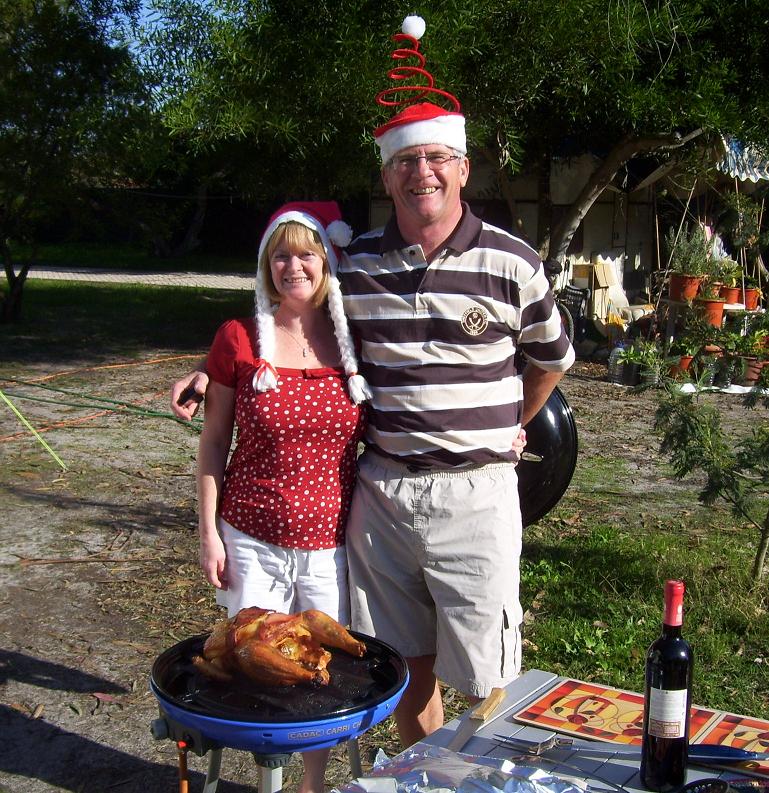
Same plan as last year, meet up with Keith and Jill for xmas in Vila Nova de
Milfontes.
Christmas Day In The Sun.....................Again!
In January our work colleagues Tony and Debbie
arrived in Milfontes in their motorhome, having spent xmas at home. They
planned to stay with us for a couple of weeks to learn about camping and wild
camping on the Algarve.
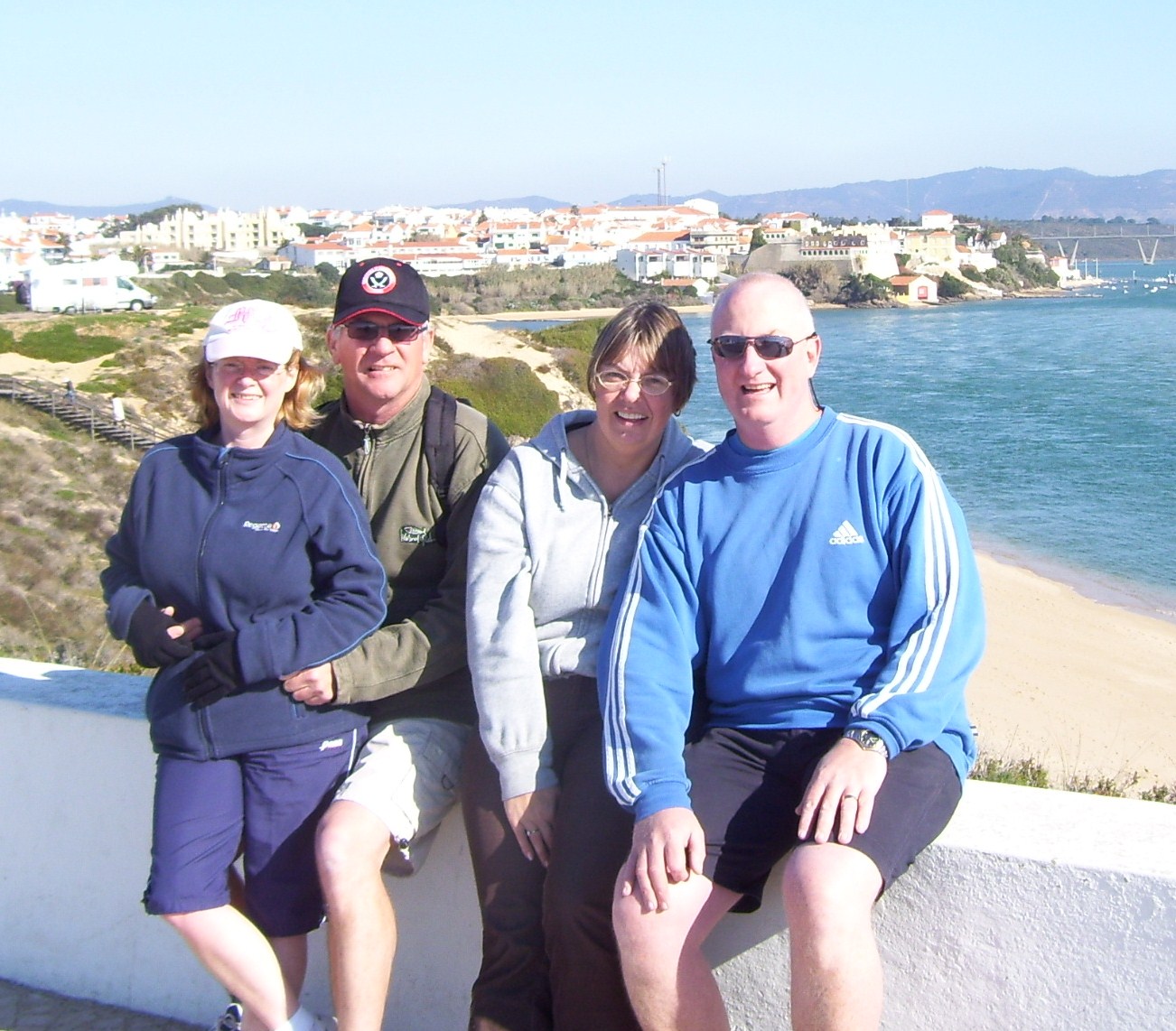 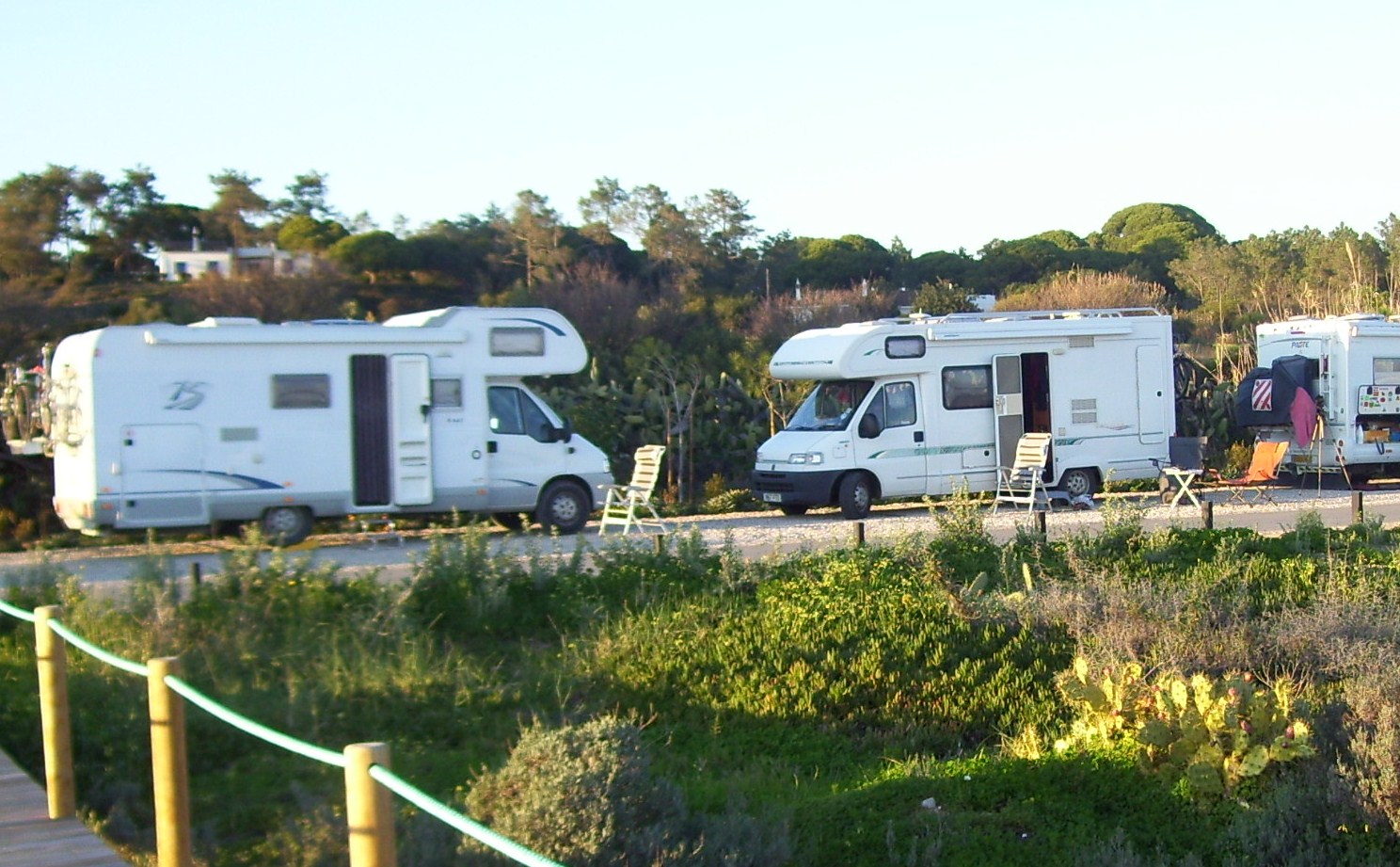
We took them to a few of the wild camping
spots we had used in previous years. We stayed a night or two in different
places, depending on the weather; it is not much fun on desolated beaches when
it is blowing a gale, cabin fever starts to take over. We crossed the Algarve
and stayed on parking bays on an estuary, near Tavira, the Ria Formosa, where
we had beautiful sunsets, and fantastic views of wild life on the water,
spoonbills, herons, storks, guillemots, cormorants, all fishing in the same
spot for trapped shoals of fish. Tony made good use of his camera.
Tony and Debbie had a shorter stay in the sun,
than us, so we parted company, they heading to the high City of Ronda. We still
had time to kill before meeting up with the Spanish group of the
Motorcaravanners Club. A rally was organised for early February, in Estepona.
Giving us chance to catch up with friends from previous years, Bob and Val from
Javea, Alan and Anne from Alicante, and other regulars of the Spanish group.
Eventually February 15th arrived,
our planned departure for Morocco. But as we arrived at the ticket booking
office, which is hidden in a huge retail park near Algeciras, we knew something
was wrong. It was quite windy, and we guessed the ferry was cancelled due to
winds in the Straight of Gibraltar. The retail park had become a temporary
motorhome park, for motorhomers waiting for the ferries to sail.
There is more than one ferry to Morocco, some
go from Algeciras to Ceuta (pro, soota) others land at Tangier. The Ceuta
crossing is the shortest and cheapest,we chose that one.
Ceuta is a Spanish enclave on a tip of land,
straight across from Gibraltar. Once landed, you have to drive about a mile and
half to the Moroccan border. I wish i had pictures of this, but photography is
frowned upon, and i did not want to upset anyone on the first day. It is not
like any border crossing we had done before, it is organised chaos, hundreds of
people, different nationalities trying to cross, plus thousands of Moroccans
crossing one way or the other for work or buy European goods in Ceuta.
There is a lot of paper work, and men in Arab
clothing offer their services to smooth your passage. We were for warned as
Kieth and Jill had crossed before. We had to ask for their identity badge,
there were called Guardians, and we were to use only authorized Guardians. It
is a bit confusing, one kiosk for personal paperwork, that has to have 3 or 4
signatures, and then onto the next kiosk for vehicle paperwork for another
couple of signatures. I was doing this with the guidance of the Guardians,
while Elaine locked herself in the van, feeling that the whole of the Muslim
community were staring at her blonde hair.
Eventually we were allowed through. For anyone
planning this trip, it is not scary, it feels safe, the ferry ticket office
will supply the paper work required, and the border is manned with different
types of police, it felt very safe to me, not threatening at all.
We were now in Morocco, another first for us.
For this trip, we were following Keith and
Jill, plus Alan, Keith and Gills friend, they had all been before.
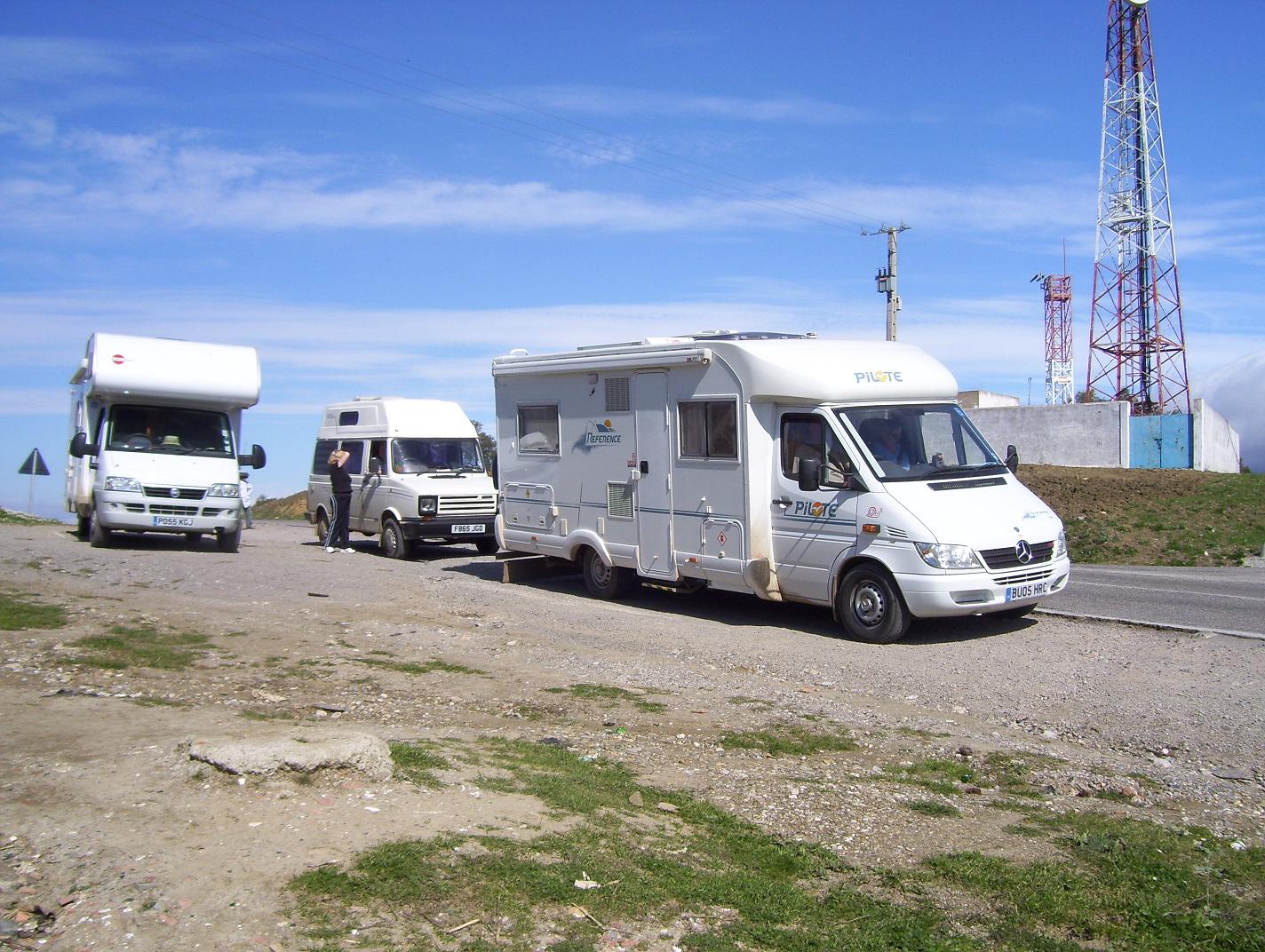
The Ceuta crossing is preferred by motorhomers
that want to cross the Atlas Mountains, for the coast route, Tangier is the
preferred landing point. We were to tackle the Atlas Mountains, but firstly the
Rif Valley, which is the main drugs region.
Our
first stop was to be the mountain town of Chefchaouen, just before the Rif.
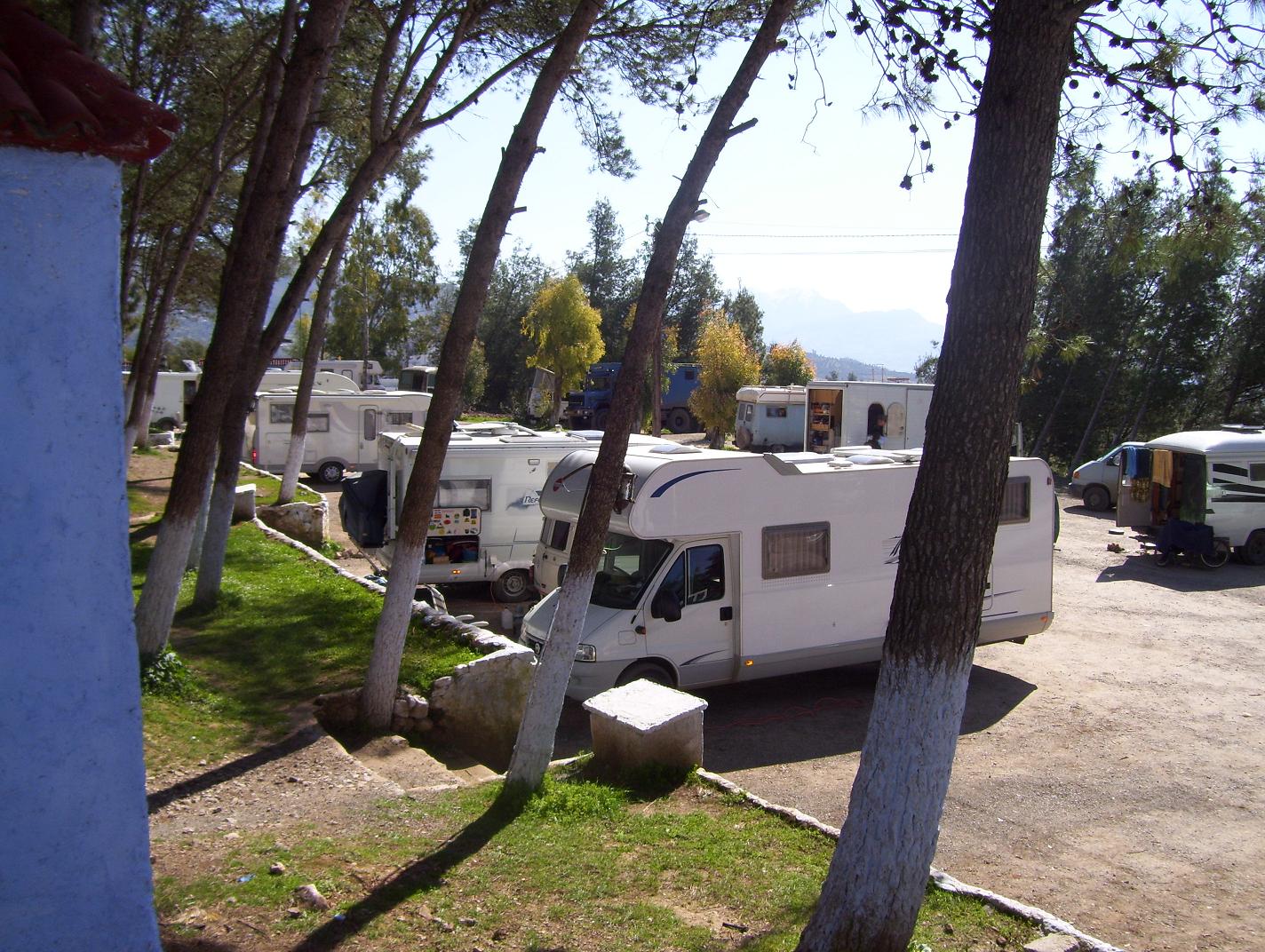 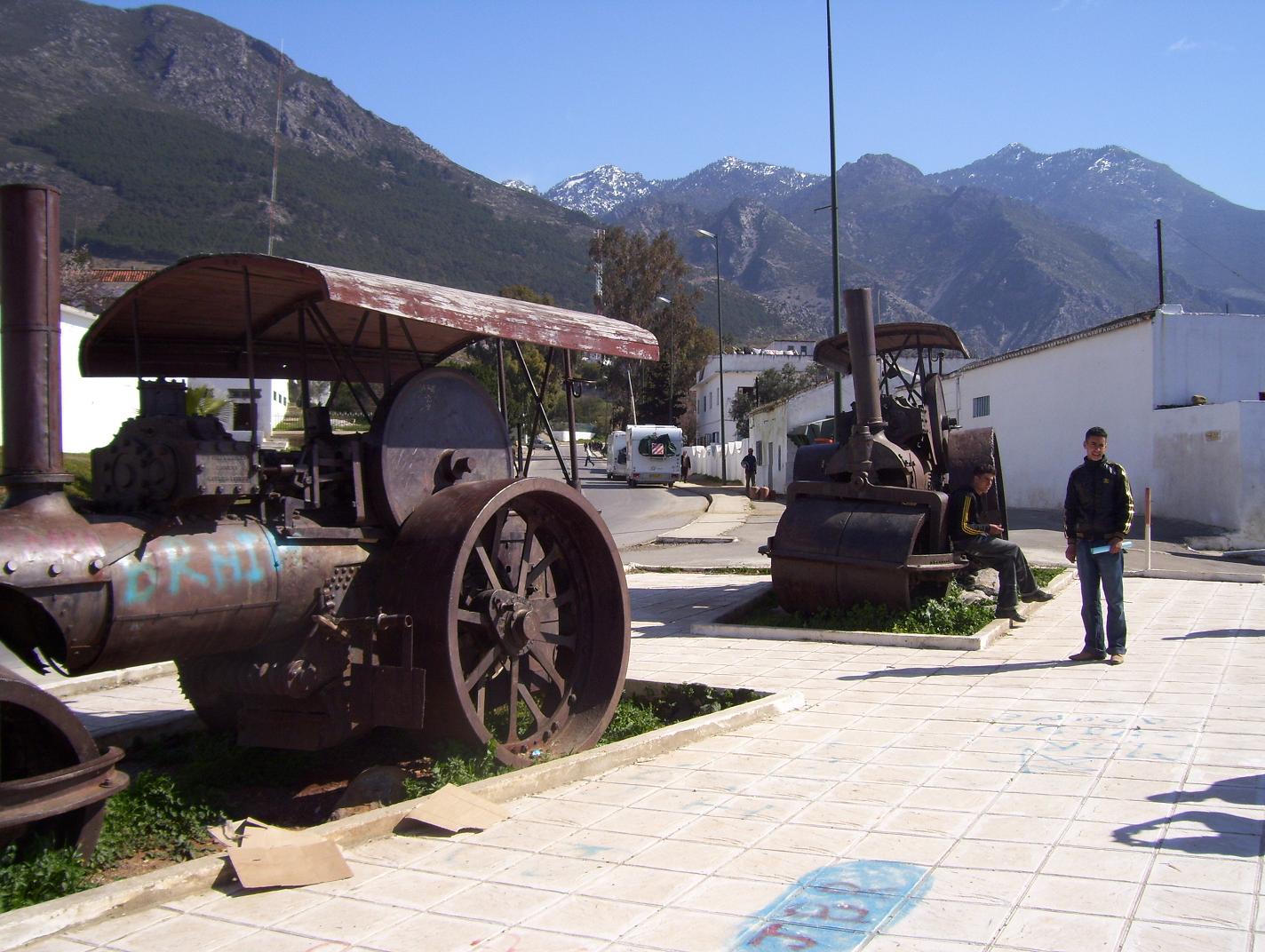
We encountered the two Leeds built
steamrollers as we entered the town.
The site, and all the other sites we stopped
at, were quite basic, poor electricity, as low as 170v in some, not enough to
even power the fridge, and low voltage plus cross polarity at others. A
voltage/polarity checker is a must for Morocco. We did not venture into town;
we just rested and admired the views from the hillside campsite.
Our next stop was to be Fes, and stop there
for three days, so that we could explore the ancient city. We found the
campsite, and it was becoming obvious, many motorhomers had come to Morocco to
get away from the bad weather in Spain.
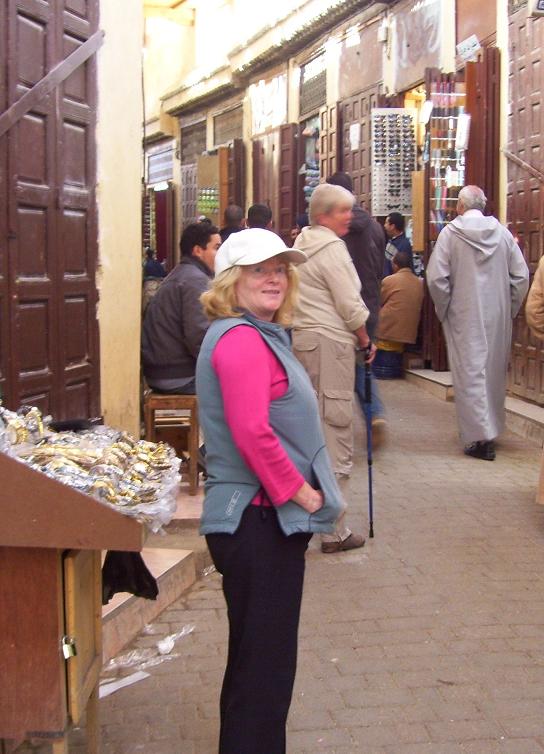
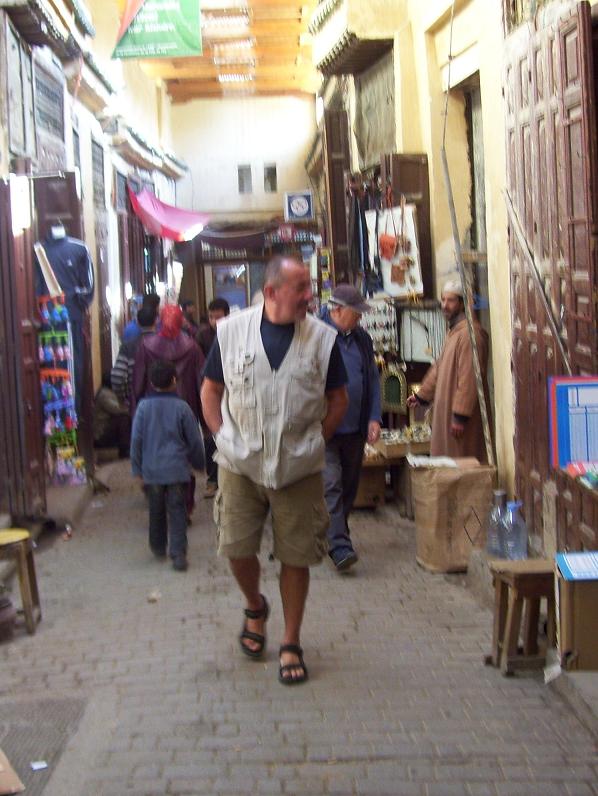
We booked a guide and taxi from the site, to
the Medina, old walled city, and the souks, narrow alleyways of shops, home,
schools, hospitals restaurants, and mosques. An excellent experience for anyone
who has never ventured into such a place, to see the people of all ages, going
about their daily business, no cars, it is not wide enough, houses being
restored, kids playing football, carts pulled by donkey’s, shacks selling mint
tea, shacks selling everything, and small bakeries that look like caves,
producing round flat loaves of bread. But, again, no sense of crime.
We had given ourselves three weeks to due the
1800mile circuit, from Ceuta to Ceuta, via, Fes, Erfoud, Ouarzazate, Mhamid (
edge of the Saraha ) , Agadir, Casablanca and Rabat. So this did mean that most
of our stops were for one night only, and inbetween towns there is not much to
see or stop for. Begging is a bit of a problem, kids flock to the side of the
road, waving, hoping you will throw out sweets, pens, clothing or something the
can barter with. So stopping, for lunch, or a tea break, as to be done, with
military tactics. Stop in vast open vast areas, so you can see the enemy
approach, park facing your escape route, someone always be on the look out, be
prepared with something to throw out of the window to cause a distraction.
After leaving Fes, it is a gradual climb in to
the Middle Atlas Mountains, we had come through snow in the Rif Mountains and
valleys, but it did not feel like were climbing as high, but Fes itself must
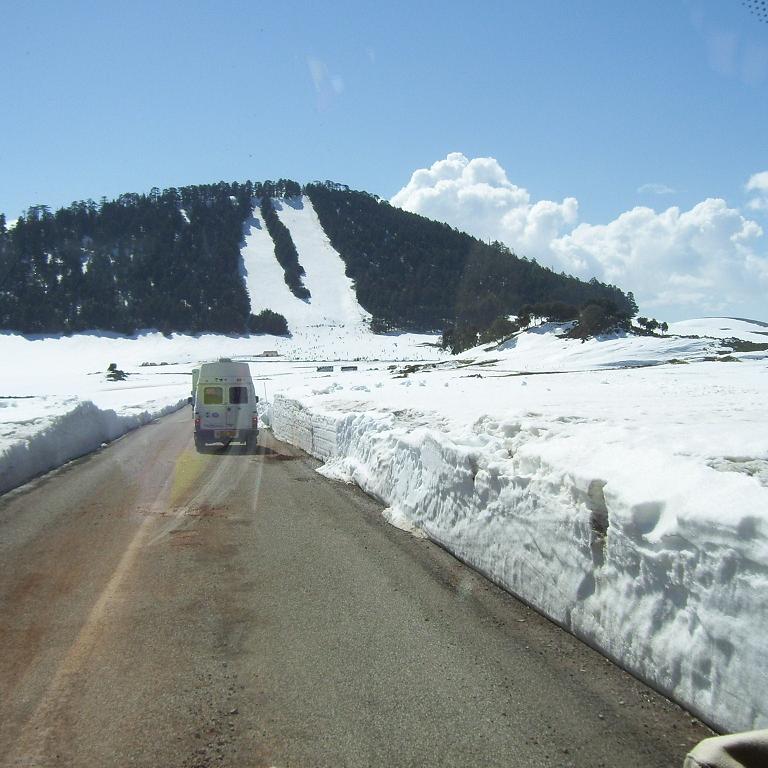
have been high, because we were soon seeing snow again. We drove through the
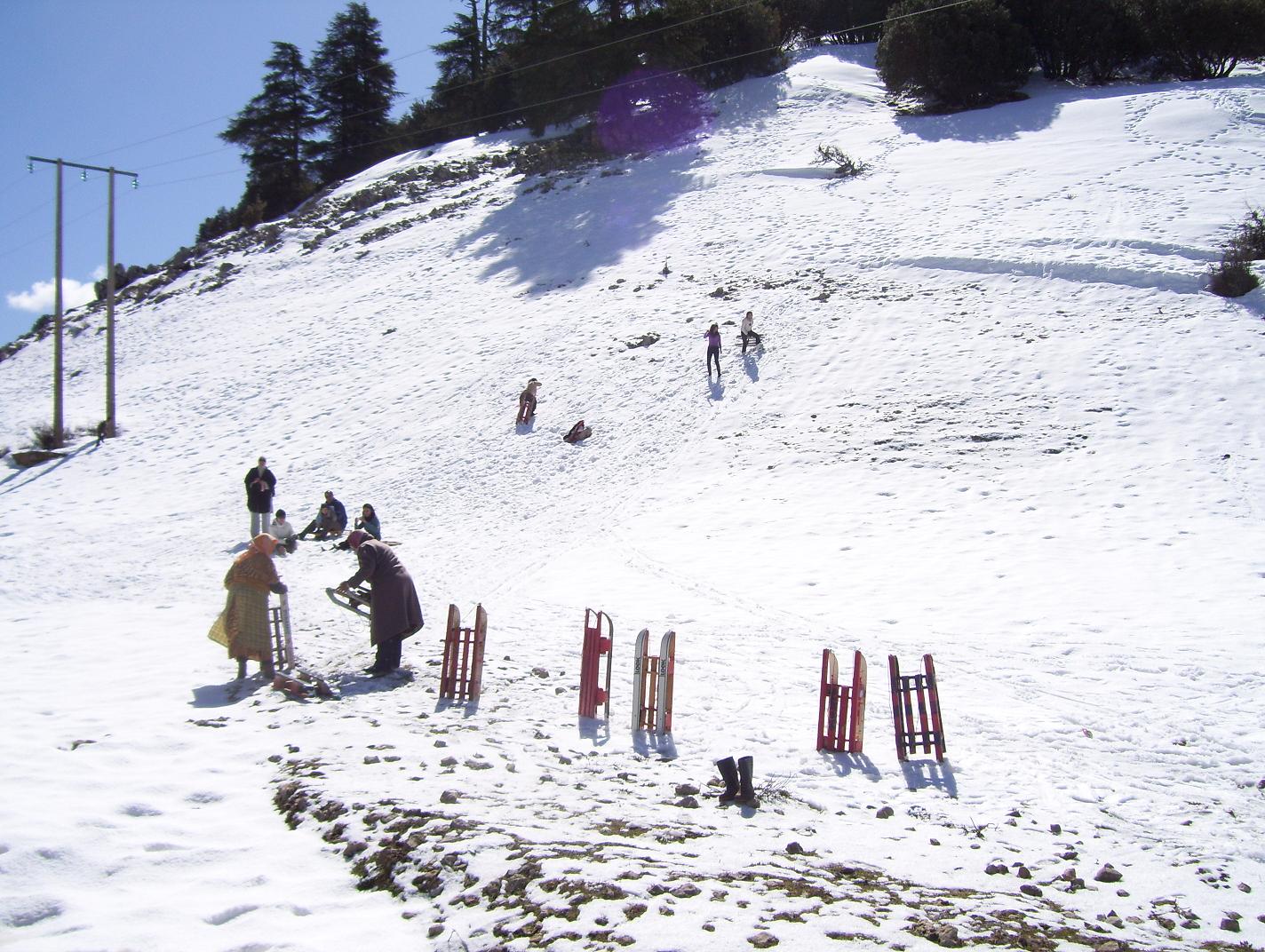
Cedar Forest, and stopped to see the Barbary apes. There were bus loads of city
people, coming out for the weekend to see the snow, home made sledges were
stacked by the road side for people to hire, and at one point we passed a ski
slope with chair lift.
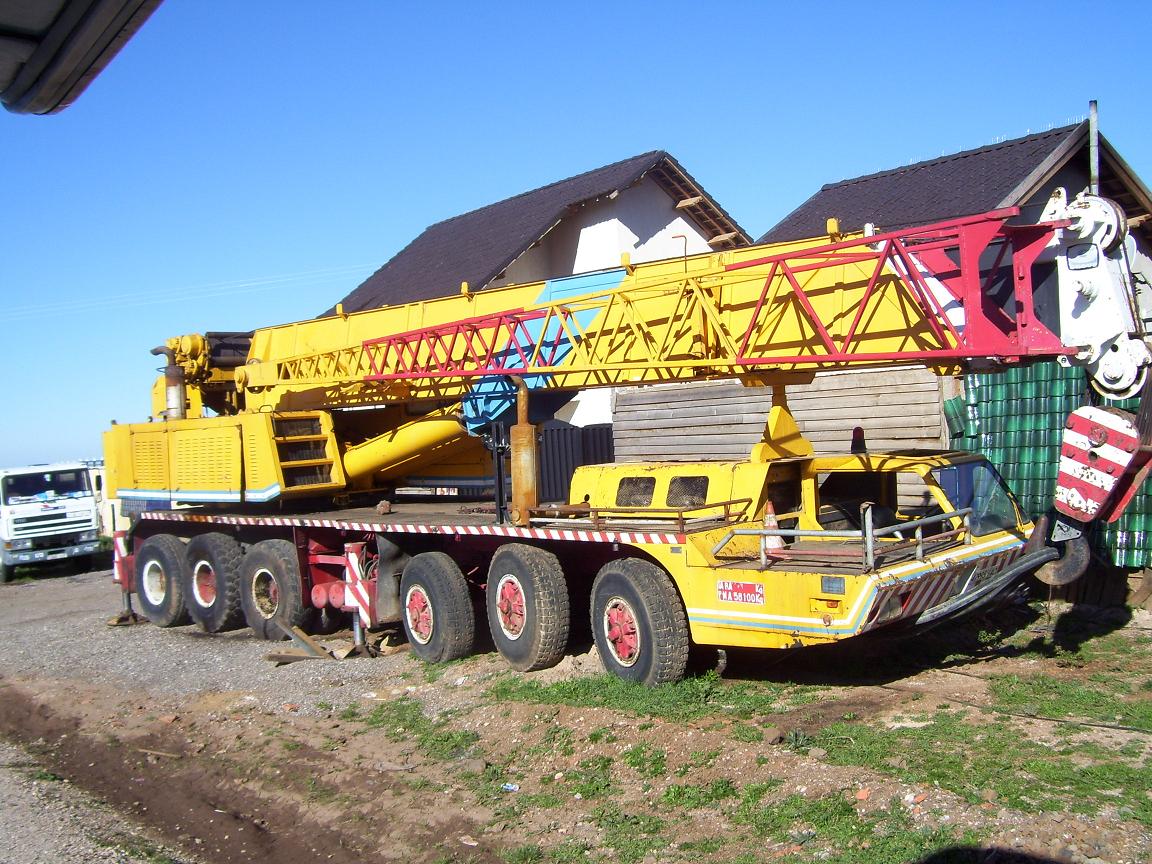
And has we stopped for the night just below
the forest, something loomed up on the side of the road, a little reminder of
another life.
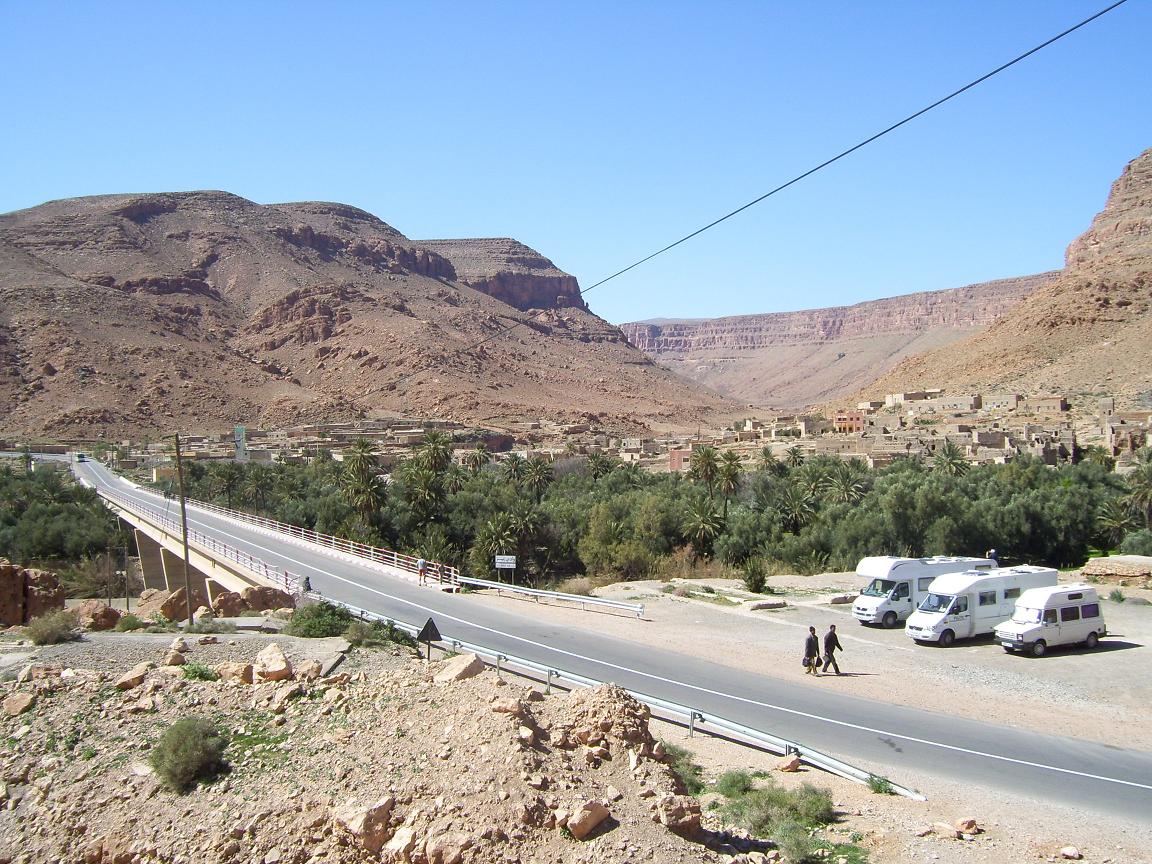
Dropping down from the Middle Atlas, the
scenery starts to change, to what you would expect Morocco to be like, palm
trees, houses made out of sand and straw and oasis, generally looking like a
warm country.
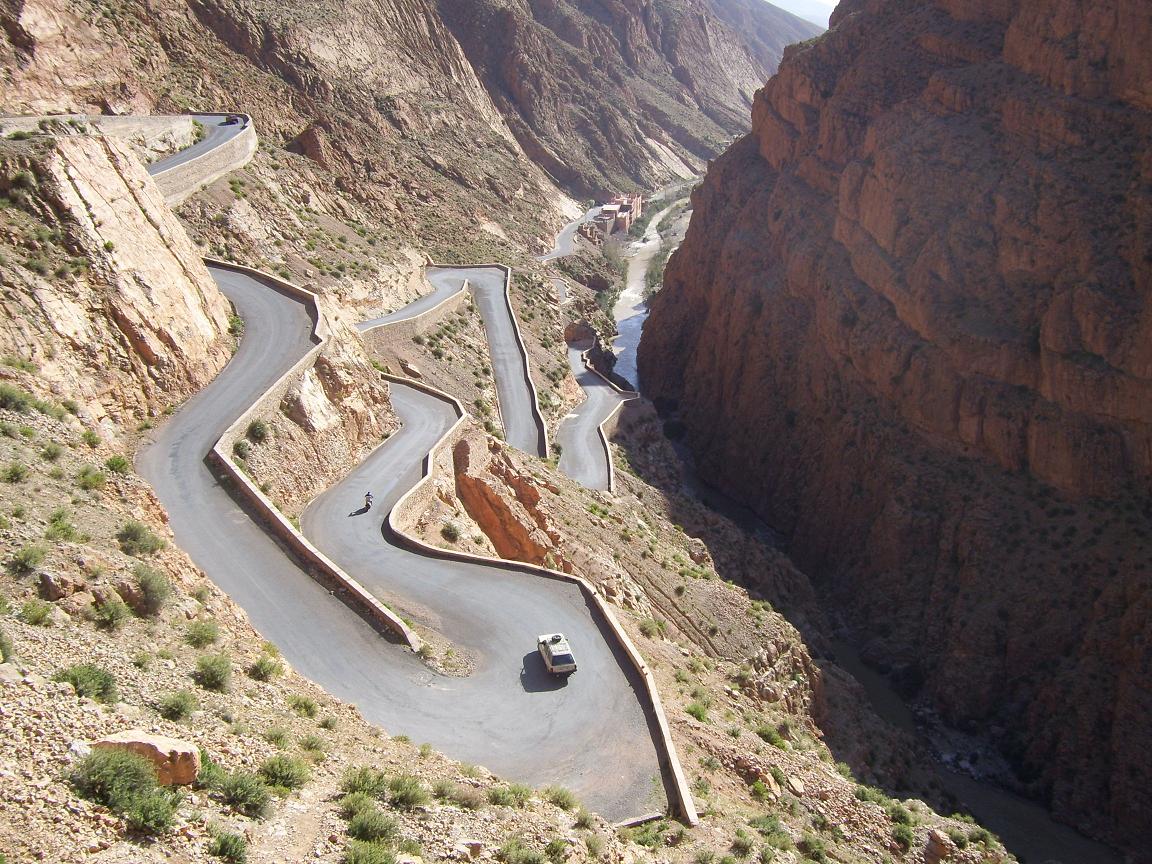
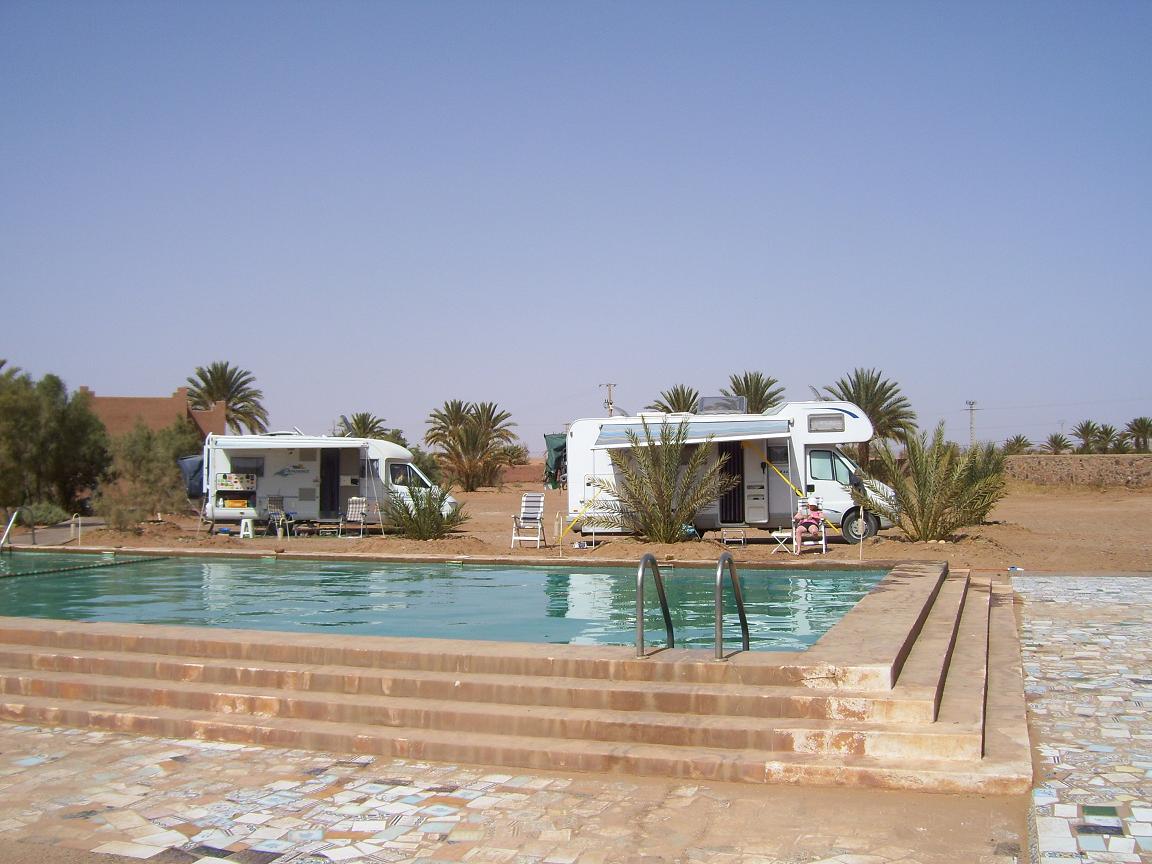
We stopped at the Gorges du Ziz for a cuppa.
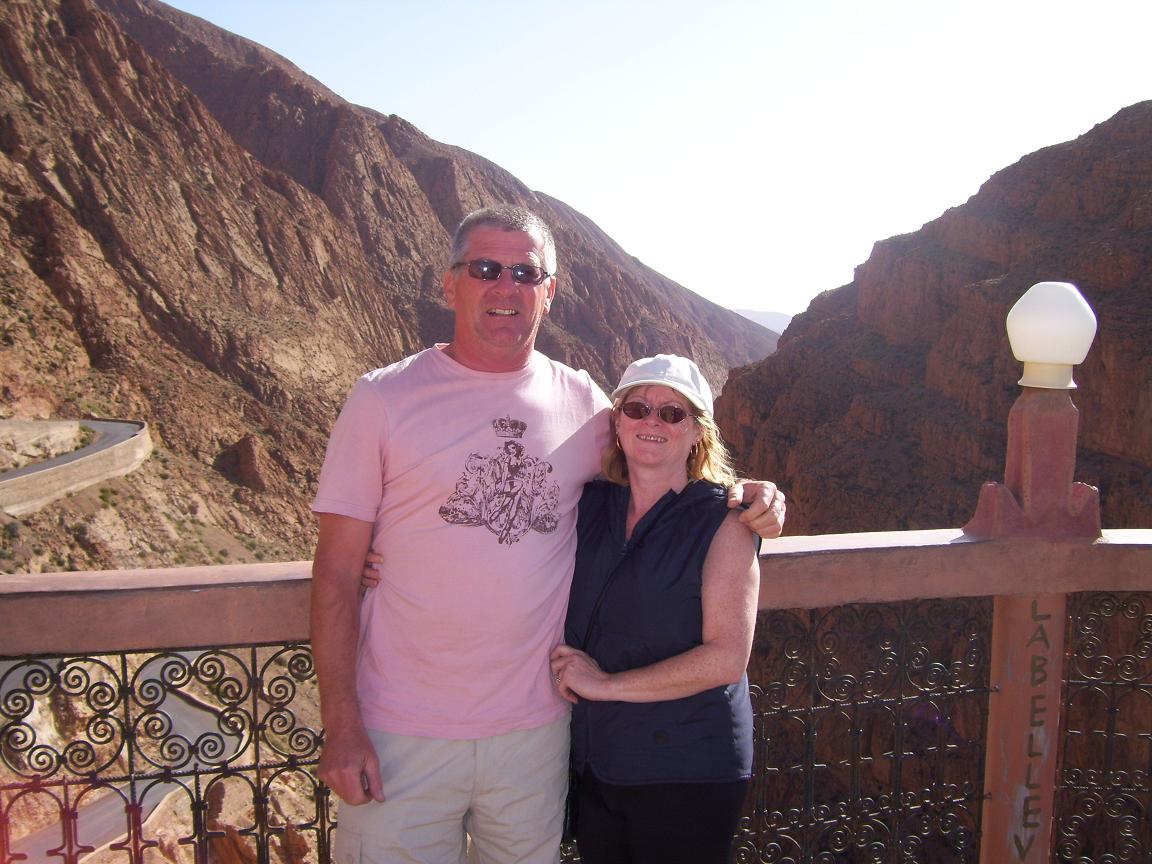
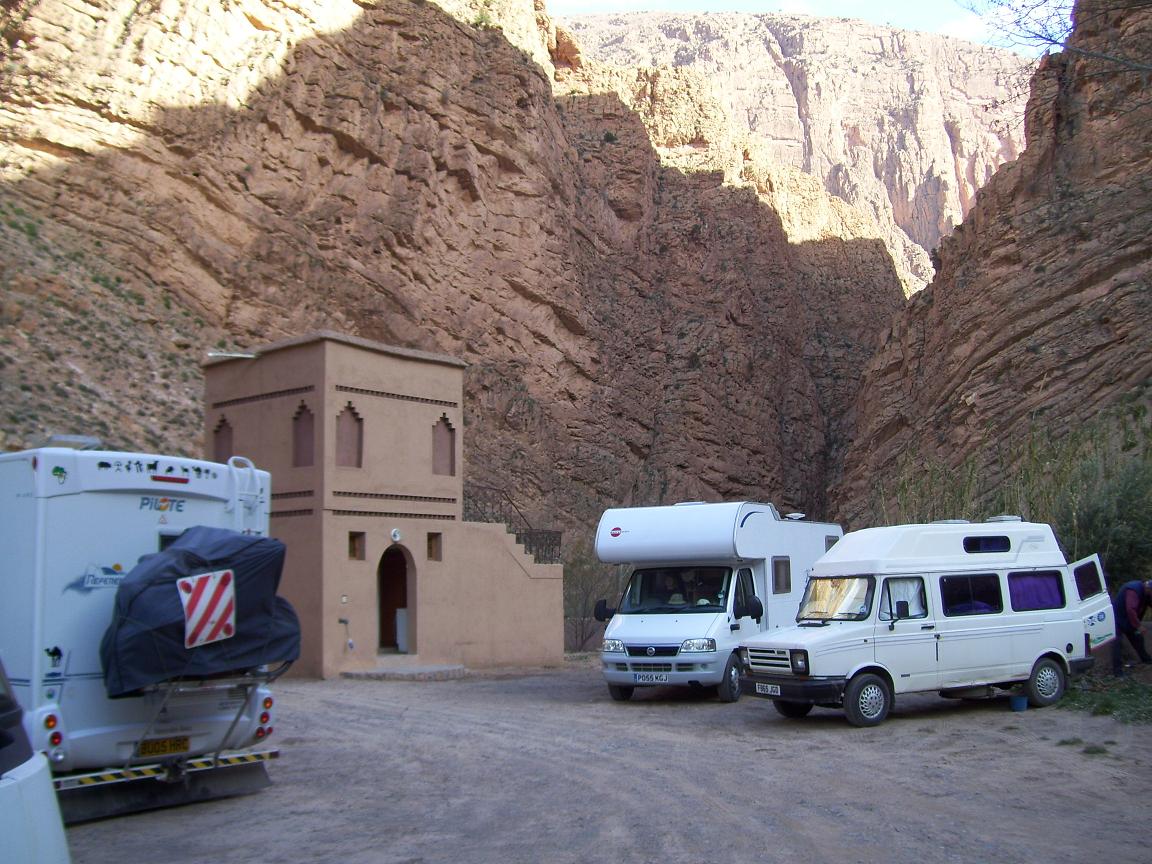
And then, onto fantastic Dades Gorge, for an
overnight stay, on a campsite cum, hotel, cum, cafe, right at the end of the
gorge
We had done 664 miles to here, and it was well
worth it. Fuel had been easy to come by, although petrol stations that take
cards are few and far between, so you need to carry some cash, cash points,
ATM’s can easily be found in large towns.
Next we head for Ouarzazate, a town/city that
is a main stopping point for motorhomes travelling around the country, and a
staging point for venturing to the edge of the desert. The campsite was very
full, and by now i had learned not to even bother with the electricity, the
solar panel on top easily provides us with enough 12v electricity. From there
the next day we head for Zagora, the final stop before a single track road
takes you to Mhamid.
But let me go back a bit, well a lot. We spent
New Years eve on the same motorhome aire as last year, 20 kilometers up in the
hills above the Algarve. During the meal, I sat next to a Frenchman, who via
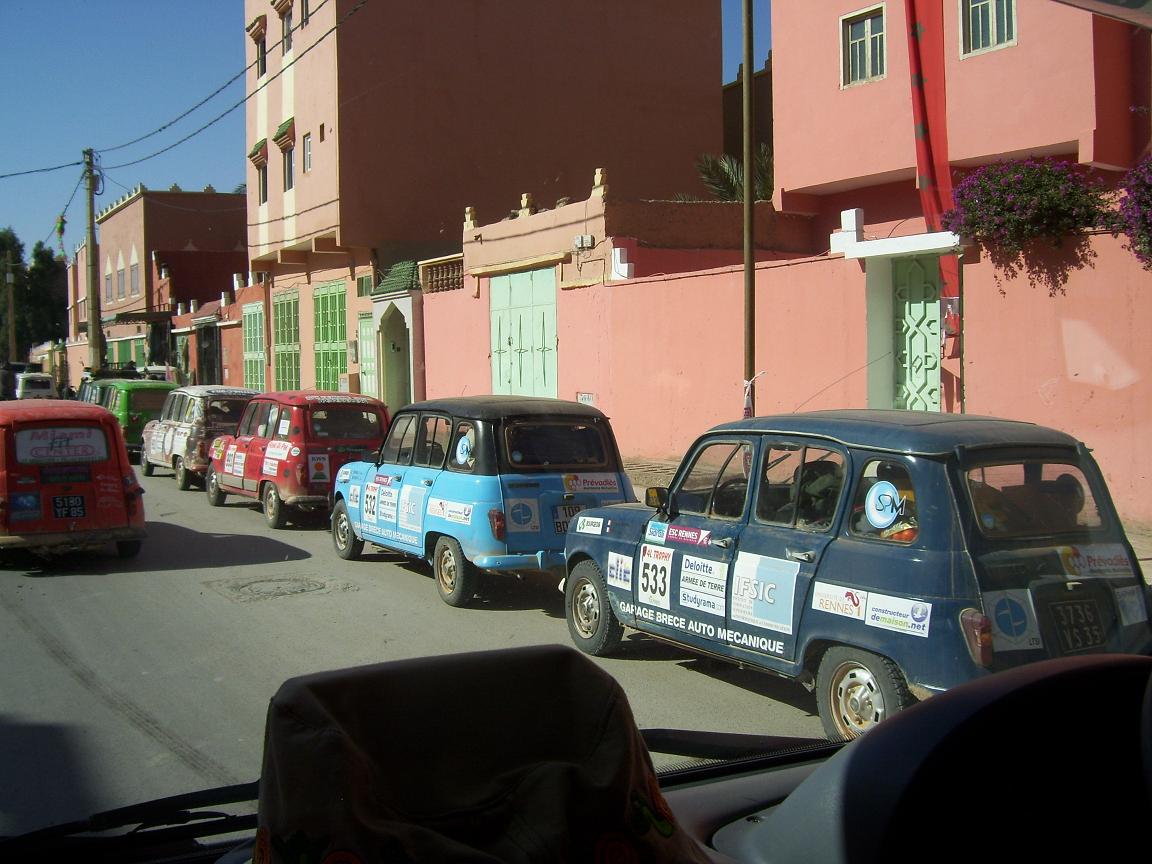
someone who could speak French, told me he was back up to a convoy of 100
Renault 4 cars, heading to the desert, with educational literature for needy
schools, and they would be travelling down around the same time as us. Well, we
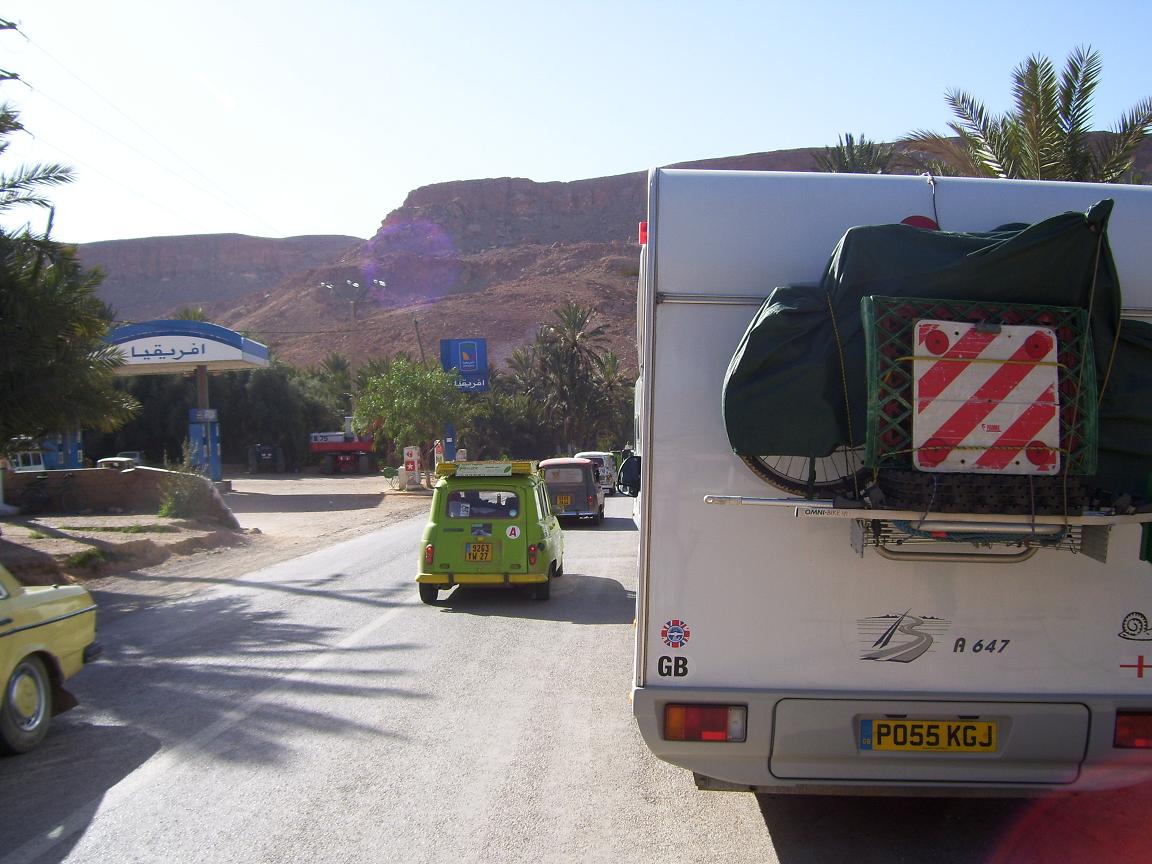
found them, not the needy schools, but the convoys of Renaults. All colours all
conditions, and all having a great time.
And who did we happen to bump into on the side
of the road in Zagora ?, Le French back up man.
I must admit, by now I was getting a bit fed
up of driving. This may sound like a great driving experience, and if Elaine
had been able to drive, then maybe it would. You have to concentrate 100% on
the roads, and try to take in some fantastic scenery, even on the long long
straight bits; you have to be ready for the random deep pothole. So i just
wanted to get to the desert, have a wee behind the bush my dad said he had a
wee behind during the war, and then head home.
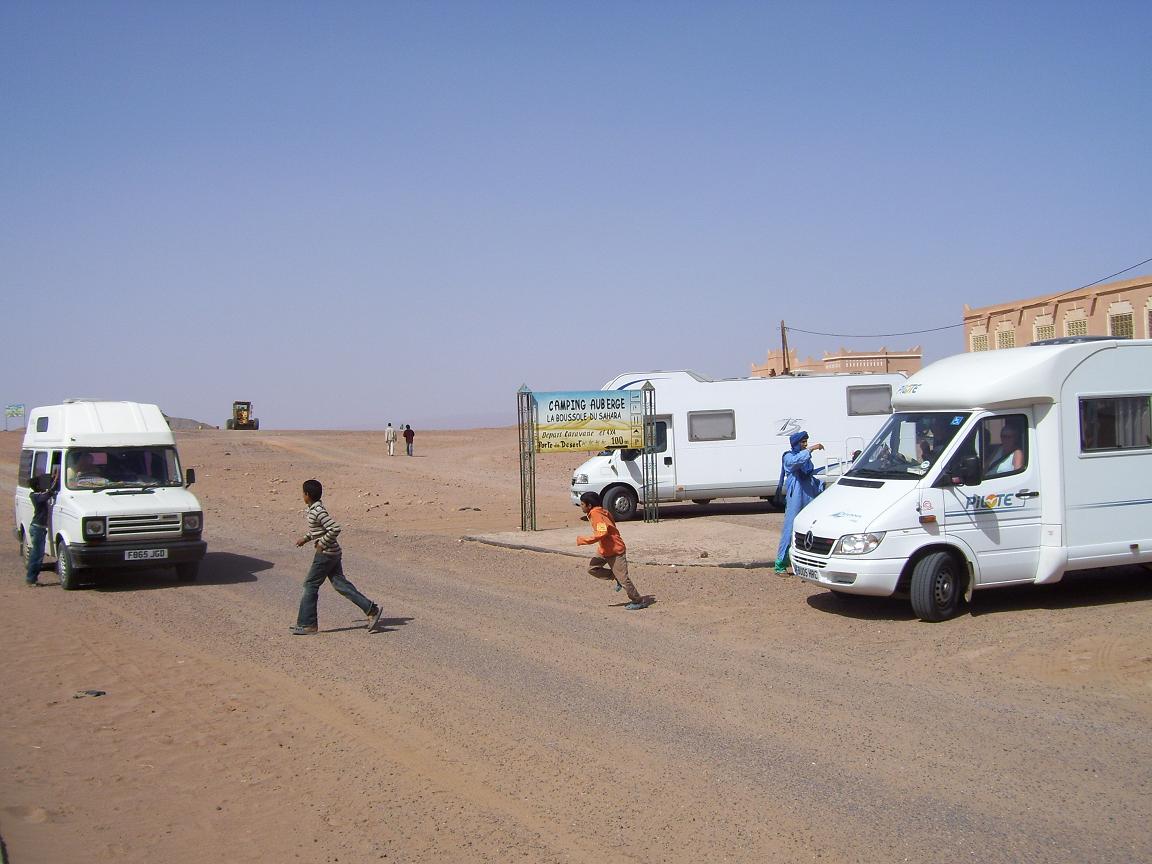
It is 64.5 miles to the end of the road at
Mhamid from Zagora. Mhamid is only a one camel town, and nowhere to go except
across the sand. We soon got surrounded by kids begging and men wanting to take
us to a campsite across the sand, we declined. So we stopped took a quick
photo, and turned around to a campsite a mile back up the road.
Keith, Jill and Alan wanted to go a bit
further south west, towards, Tiznit, I was ready for heading north. So we
agreed to part, hugs and kisses all round, and we parted company on our return
to Zagora.
There are roads in Morocco that are sand only,
off piste roads they are called, only suitable for 4x4 vehicles. A direct route
for us to get to the west coast and Agadir would be across one of these roads,
but it is not worth the risk, so we had to travel the same road north until we
found a tarmac road heading west. Which, we do, near Agdz. So now we are on our
own, with a paper map, a guide book that only shows the campsites on the west
coast, and Elaine who thinks anyone with a tea towel on their head is going to
jump in the van and molest her.
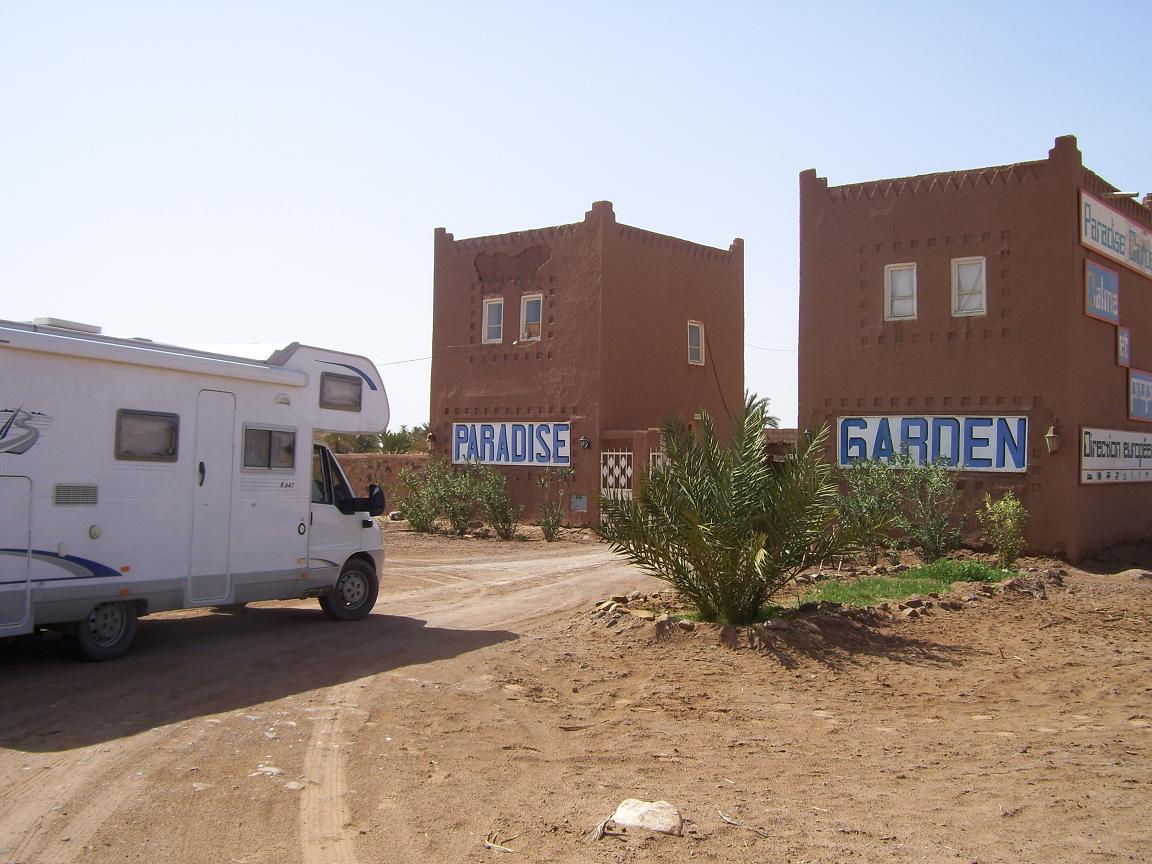
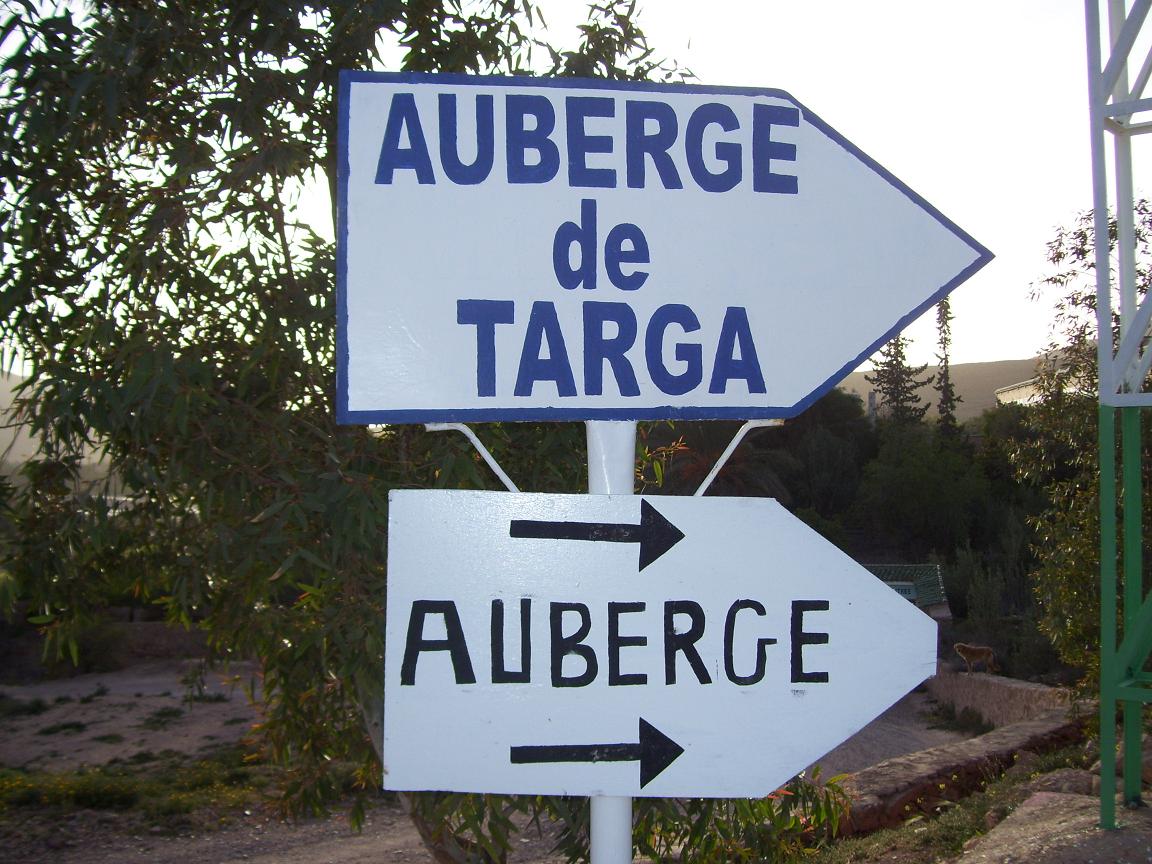
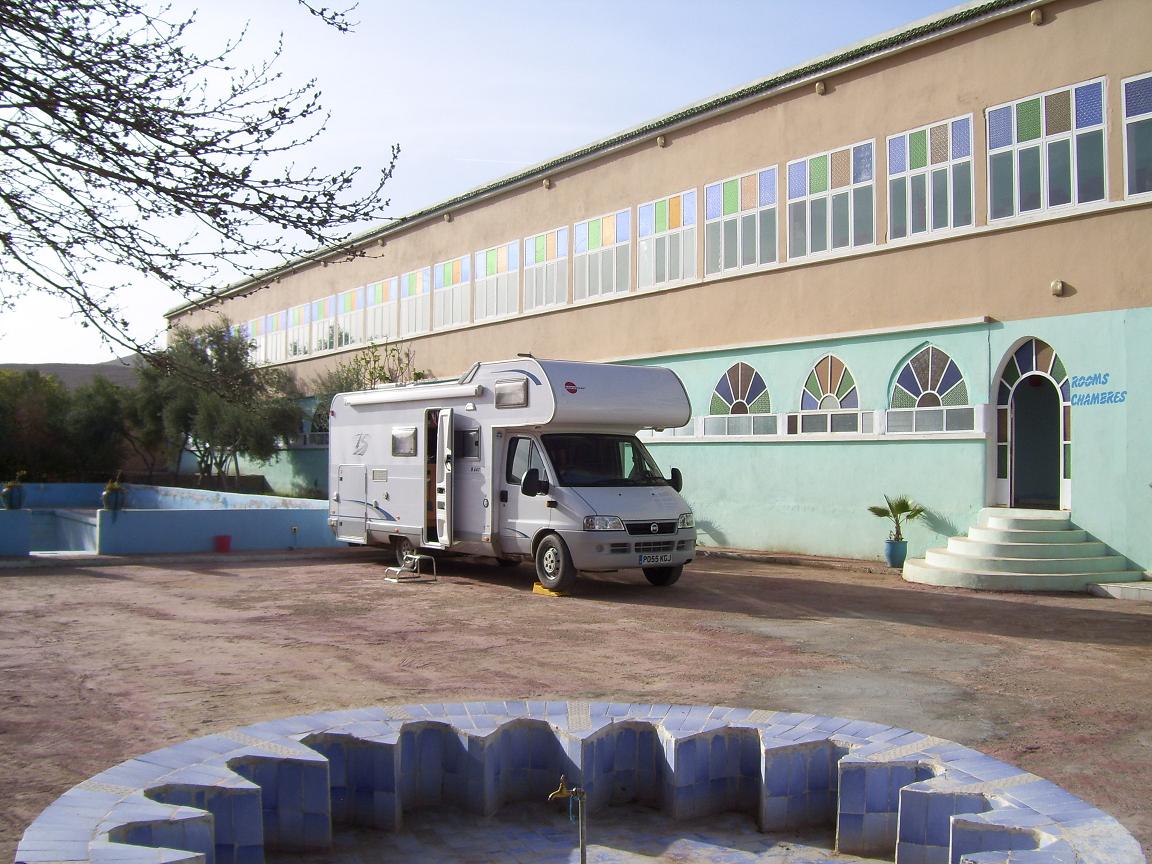
There are plenty of auberges along the routes,
cafe, hotel like places that offer camping, and this circuit has been travelled
for hundreds of years by Europeans. We easily find a hotel, just off the road,
near, Talioune. A large hotel, empty of customers, it is winter after all, and
we are allowed to park in the courtyard, by ourselves, for something like £6.
Next stop the popular resort of Agadir. We
stopped at a huge supermarket, called a Marjan, selling everything, including
alcohol, so we had to buy some Moroccan wine.
The car park was jam packed with motorhomes
from all over Europe.
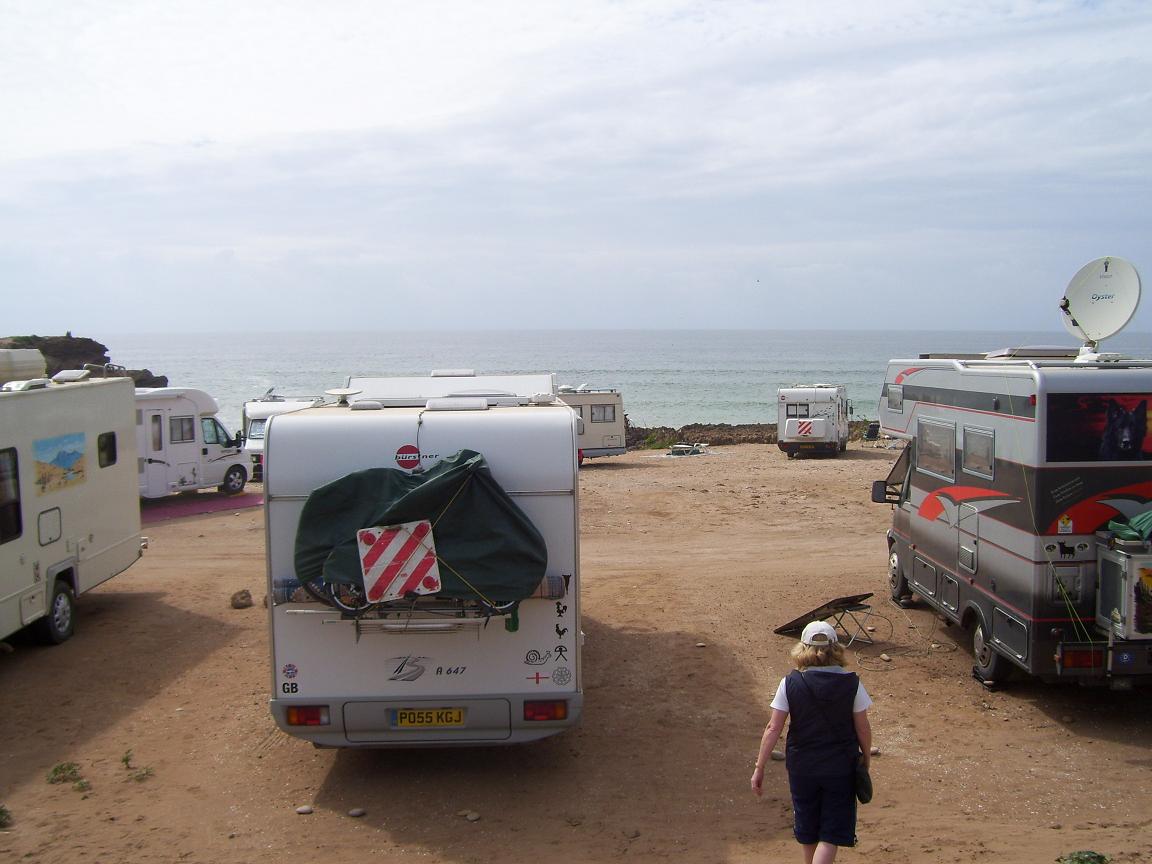
We
found beach parking for the night, along with about another 150 motorhomes,
protected by guardians, for the charge of about €3
Agadir is the most popular area for
motorhomers searching for the sun, it is about a 600 mile drive from the
ferries. We met and talked to some English motorhomers, they had had days of
glorious weather, but when we told them of our journey, they had no idea
Morocco had such sights.
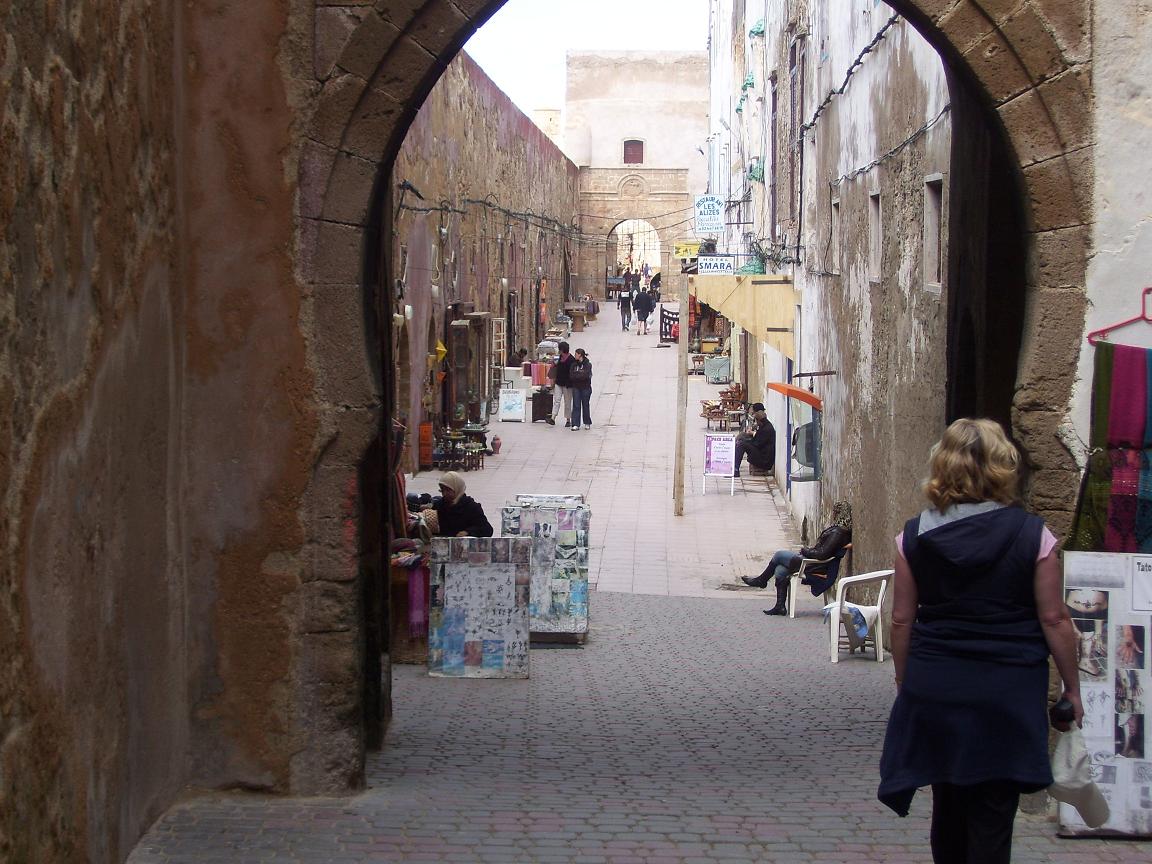
From
here there were only two more stops before the ferry, Essaouiri,
where we entered the medina and walked through
endless souks. Always take old clothes, trainers, baseball caps with you for
bartering with, anything is currency in Morocco.
Our last stop was at a campsite in Moulay Bousselham,
just about 150 miles from Ceuta.
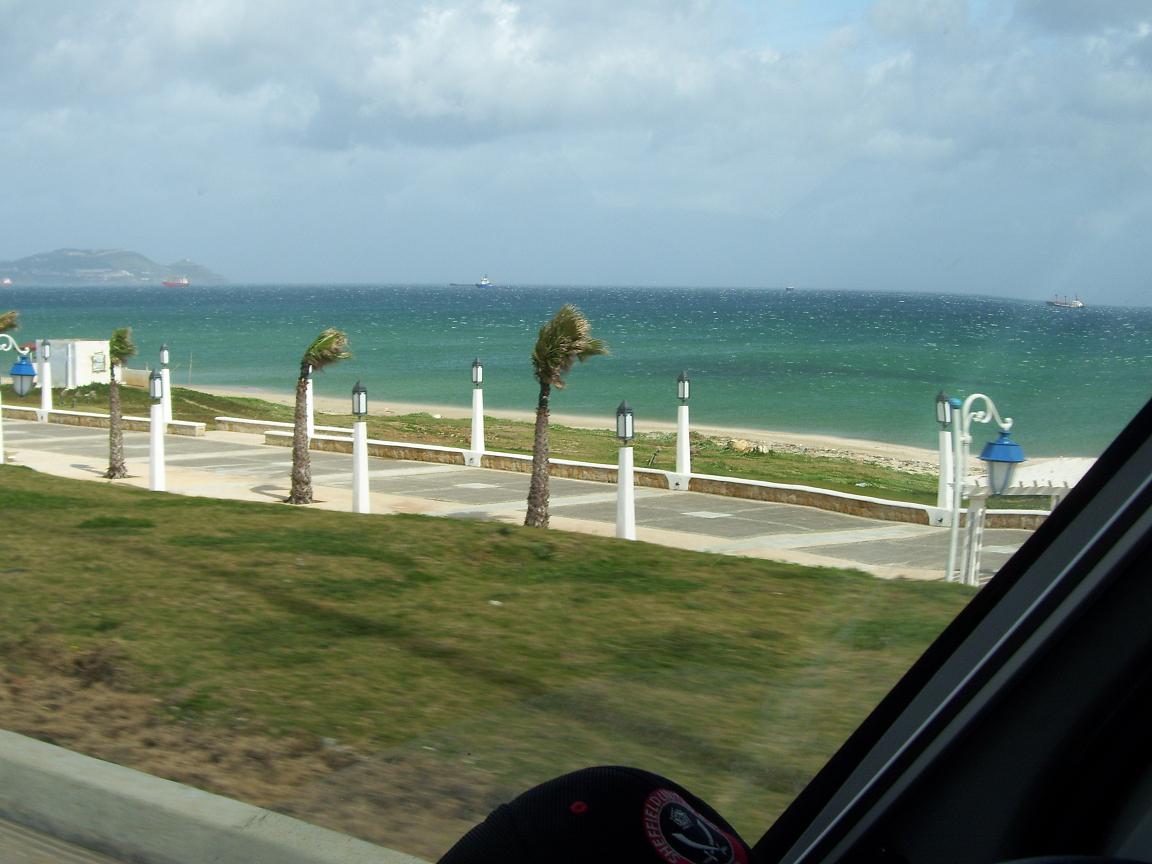
We
noted how windy it became as we crossed the northern tip of Morocco towards
Tetouen and Ceuta, and driving the stretch up the coast road, we could not see
any ferries out at sea.
The ferries run all day, so there was no need to
book, we had the timetable, but arriving at the ticket
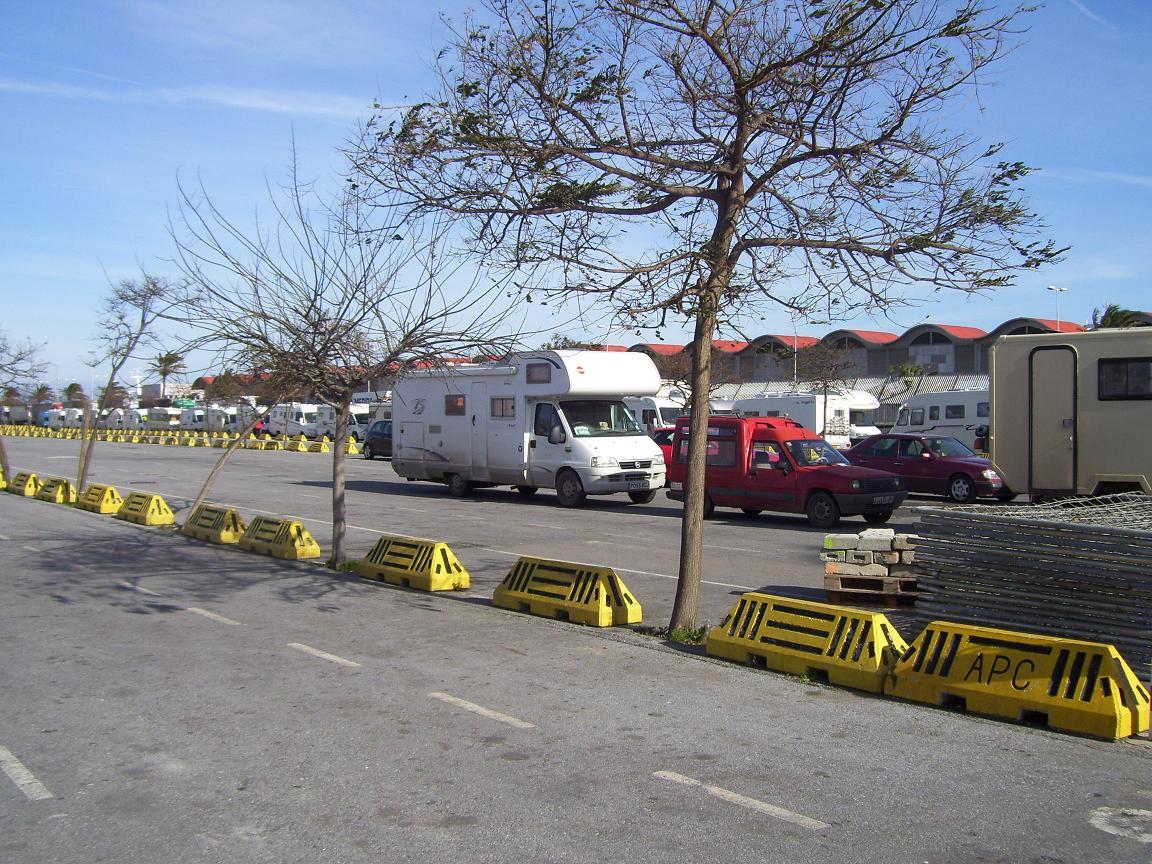
gate we encountered another long line of
motorhomes.
And,
yes, it was too windy, “maybe tomorrow, maybe the next day” the girl in the
ticket booth said. There is not a lot you can do when the weather decides to
halt proceedings. Just park up with the rest, wander around the town, check out
the local Lidl, buy more wine, and get ready to sleep in the carpark. We had
done a grand total of 1862.4 miles on our circuit of Morocco.
The next morning, the wind had dropped, and we
were able to get a ferry at around 10.30. We learned that some people, who had
booked with a different ferry company, had been waiting five days, as the ferry
company only had one ferry, and it had had an accident when trying to berth. We
were just relieved to be moving again.
Now, back up through Spain, via Jerez,
Seville, Caceres, Salamanca, Burgos and San Sebastian, and into France. We have
learned of places to stop along this route, hotels or petrol stations, off
route, in quiet locations, where we feel safe to park overnight. Then once into
France, we can use the official motorhome aires.
As we drive north, we see the devastation the
high winds had caused to the Landes region, between Bayonne and Bordeaux. A
vast flat area, what used to be marsh land, now used for cultivating pine
woods, we have never seen so many pine trees laid flat, great swathes of trees,
up rooted, plus power and telephone lines. We headed for the aire at Hostens,
just off the main N10.
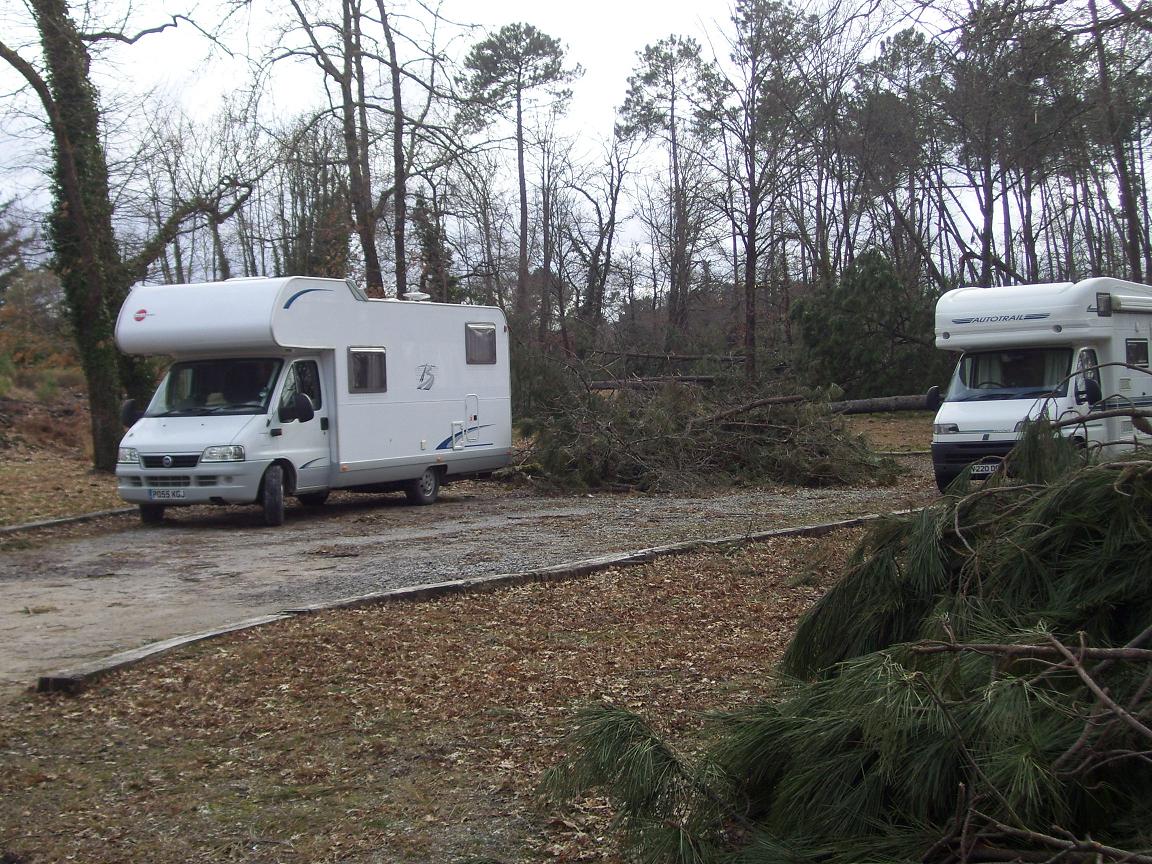 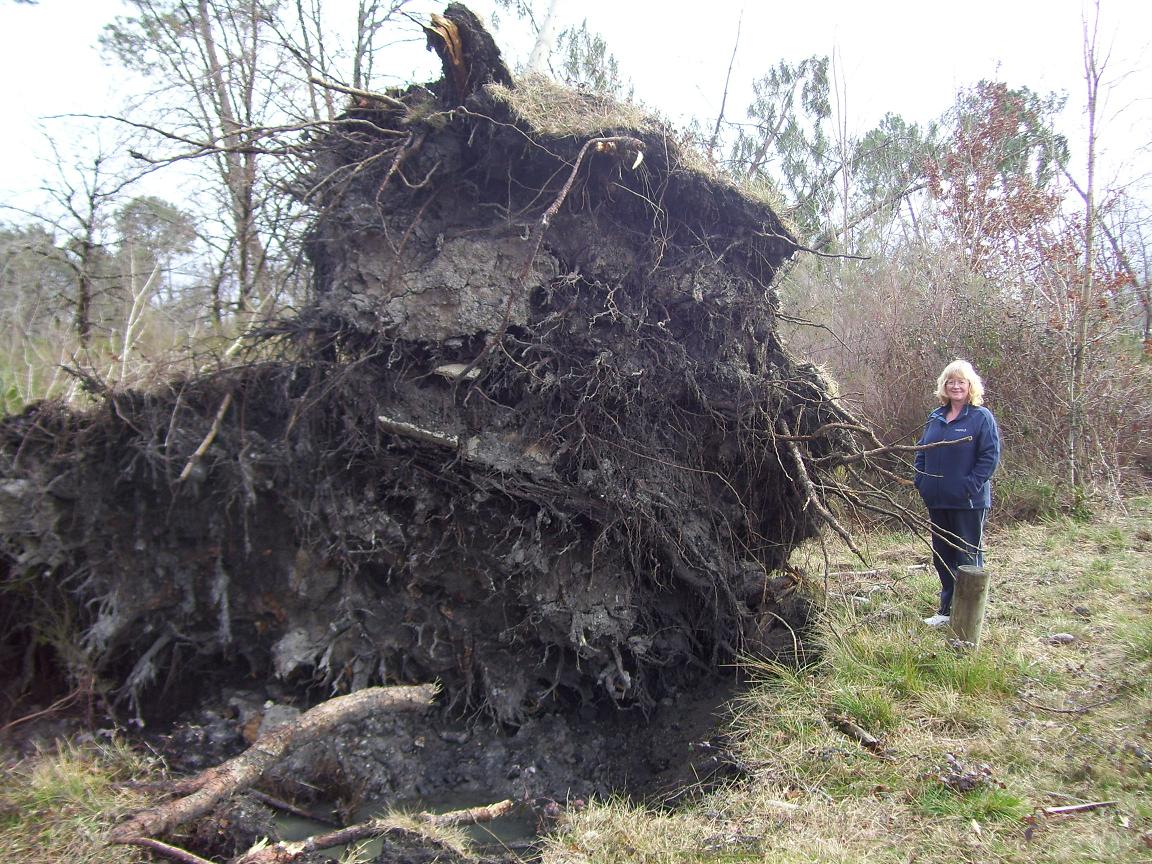
We found another English motorhome resting up
there. Debris was everywhere.
After
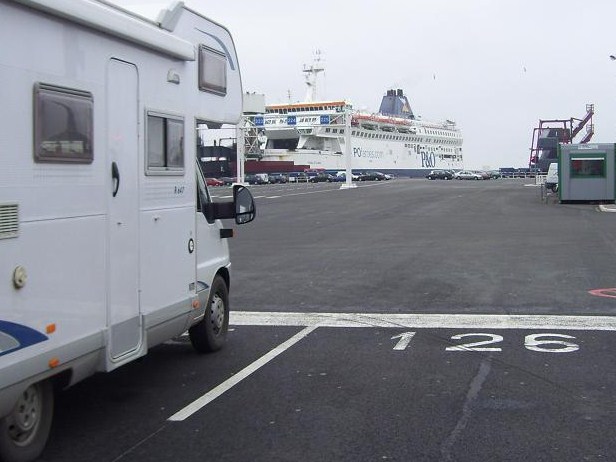
a few more days, our journey’s end, the ferry port at Calais. Elaine was now
seaworthy; she had been on ferries to Africa, so now we could take the cheap
route home, a ferry instead of the tunnel.
I still prefer the tunnel though, it’s easier,
and you get to stay in your van, but the cheapest crossing was £96, compared to
£36 on the ferry. That is a lot of diesel money to waste.
Back to The Old Oaks, for another season, and
see what unfolds.
Italy had been mentioned for next winter, but lets
get this experience out of our system first, plus the sand out of the van.
Life is not a rehearsal, you only get one go
at it!
Elaine & Mike
Chapter
1
Chapter
2
Chapter 3
|